
A Journey Through Centuries of Mountain History
Discover the fascinating history of one of North Georgia's most beautiful and historically significant valleys.
Nestled among the rolling hills and majestic mountains of Northeast Georgia lies Sautee Nacoochee, a community where history, natural beauty, and Appalachian traditions come together. Located in White County, just southeast of Helen, this peaceful mountain community has witnessed thousands of years of human history, from ancient Native American settlements to European pioneers, the Georgia Gold Rush, and the preservation of Appalachian culture.
Today, Sautee Nacoochee is known for its picturesque farmland, historic buildings, thriving arts community, and one of Georgia's most recognizable landmarks: the Nacoochee Indian Mound.
Yet behind its beautiful scenery lies a remarkable story of civilizations, hardship, change, and a community determined to preserve its heritage.
Ancient Beginnings: The First People of the Valley
Long before European settlers arrived, the Sautee and Nacoochee valleys were home to Native American communities. The fertile soil, abundant wildlife, freshwater streams, and nearby Chattahoochee River made this region an ideal place for settlement.
Archaeological evidence indicates that Indigenous peoples occupied the Nacoochee Valley many centuries before European contact. During the Mississippian cultural period, communities developed agricultural settlements, cultivated crops, and constructed ceremonial earthworks.
The most famous reminder of this ancient history is the Nacoochee Indian Mound.
Situated near the intersection of Georgia Highways 17 and 75, the mound represents an important archaeological site. In 1915, researchers associated with the Smithsonian Institution and the Museum of the American Indian conducted excavations that uncovered 75 human burials and evidence of different stages of mound construction.
Archaeologists believe the mound served ceremonial and community purposes, although its complete history remains a subject of study.
The Legend of Sautee and Nacoochee
One of the area's most enduring stories is the legend of Sautee and Nacoochee.
According to local folklore, Nacoochee was a beautiful Native American maiden who fell in love with Sautee, a young warrior from a rival tribe. Their forbidden romance supposedly ended tragically, and the lovers were buried together beneath the mound.
The story has been repeated for generations, becoming part of the valley's identity and romantic appeal.
However, historians distinguish this popular legend from documented archaeological history. There is no reliable evidence that the mound was constructed as the burial place of these legendary lovers.
Nevertheless, the story remains an important part of the folklore surrounding Sautee Nacoochee.
Cherokee Heritage and European Settlement
By the 1700s, the region was part of the Cherokee homeland. Cherokee communities maintained extensive networks of settlements, trading routes, and agricultural lands throughout the southern Appalachian Mountains.
One important transportation route was the Unicoi Turnpike, which developed from older Indigenous pathways. These routes connected communities across the mountains and later helped European settlers, merchants, and travelers move through the region.
During the early 1800s, increasing European American settlement transformed the valleys. Farms, homes, roads, and businesses gradually appeared across the landscape.
The expansion came at a devastating cost to the Cherokee people. Following the discovery of gold in North Georgia and increasing pressure for their lands, the Cherokee were subjected to forced removal during the 1830s, part of the tragic Trail of Tears.
The history of Sautee Nacoochee cannot be fully understood without recognizing the Indigenous communities whose lives and cultures shaped the region long before modern Georgia existed.
The Georgia Gold Rush and a Changing Landscape
The discovery of gold in North Georgia in 1828 brought tremendous change to the mountain region.
Although Dahlonega became the best-known center of Georgia's gold rush, prospectors explored streams and valleys throughout Northeast Georgia, including areas around Nacoochee.
Gold mining attracted newcomers hoping to find wealth and helped accelerate the development of roads, settlements, and commercial activity.
However, agriculture remained central to the Sautee Nacoochee economy. Families established farms, raised livestock, and cultivated crops in the fertile valleys.
Over time, the landscape became a patchwork of farms, homesteads, churches, and small rural communities.
The gold rush helped shape the broader region, but the farming traditions that followed became equally important to Sautee Nacoochee's identity.
Historic Hardman Farm
One of the community's most important surviving landmarks is Hardman Farm State Historic Site.
The property's impressive Italianate-style mansion was built in 1870 by Captain James Nichols. Originally known as West End, the house reflected the prosperity and architectural tastes of the period.
The property later became associated with Dr. Lamartine Hardman, who served as governor of Georgia from 1927 to 1931.
Hardman Farm also preserves reminders of the region's agricultural history, including its historic dairy barn, farm buildings, and a surviving section of the Unicoi Turnpike.
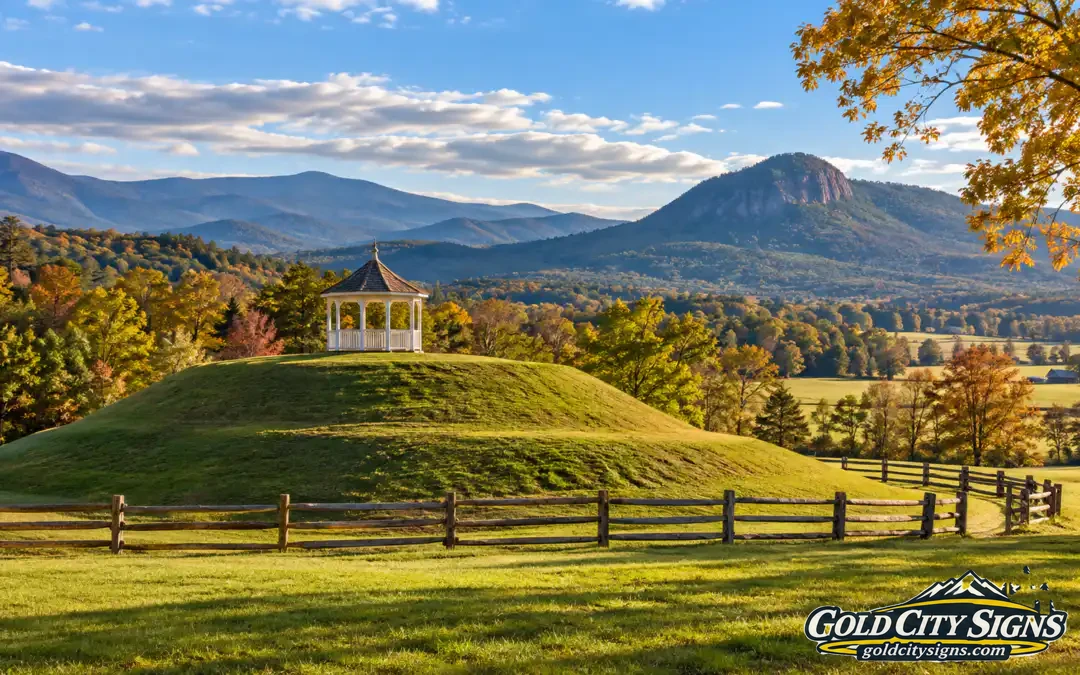
Perhaps its most recognizable feature is the reconstructed Nacoochee Indian Mound, topped by a small white gazebo.
Today, the site provides visitors with an opportunity to explore the valley's Native American heritage, nineteenth-century architecture, and agricultural traditions.
The Forgotten Stories of African American Residents
Another important chapter in Sautee Nacoochee's history concerns the African Americans who lived and worked in the valley, including people held in slavery during the nineteenth century.
Enslaved workers contributed to the region's agricultural economy, maintaining farms, raising livestock, and performing skilled labor.
The Sautee Nacoochee Center preserves a historic slave cabin dating to approximately 1850. Originally located elsewhere in the valley, the structure was relocated and restored as part of the community's African American Heritage Site.
The cabin offers a powerful reminder that the region's history includes stories of enslavement, resilience, family, and the lasting contributions of African American residents.
Preserving these stories ensures a more complete understanding of the people who helped build the community.
Preserving the Valleys for Future Generations
By the twentieth century, Sautee Nacoochee had become known for its scenic beauty, agricultural landscape, and historical significance.
During the 1970s, residents grew concerned about development and the possible loss of the valley's unique character.
Their efforts led to the Nacoochee Valley being listed on the National Register of Historic Places in 1980, followed by the Sautee Valley in 1986.
Community members established the Sautee Nacoochee Community Association to protect historic resources, encourage preservation, and promote cultural activities.
In 1986, the organization purchased the former Nacoochee School, built in 1928, and began transforming it into a community arts and cultural center.
The project became an extraordinary example of local residents working together to preserve their history.
Sautee Nacoochee Today: A Living Heritage
Today, the Sautee Nacoochee Center is a centerpiece of the community.
The historic school campus houses art galleries, performance spaces, historical exhibits, and the Folk Pottery Museum of Northeast Georgia.
Visitors can explore the region's pottery traditions, learn about African American history, attend concerts, and discover the work of local artists.
The surrounding valleys remain celebrated for their rural scenery, mountain views, historic farmsteads, and peaceful atmosphere.
Unlike many communities transformed by modern development, Sautee Nacoochee has made a remarkable effort to preserve the character that makes it special.
A North Georgia Treasure Worth Preserving
Sautee Nacoochee is much more than a scenic mountain destination. It is a place where thousands of years of history remain visible in the landscape.
From ancient Indigenous settlements and Cherokee heritage to pioneer farms, historic homes, and modern preservation efforts, each generation has contributed another chapter to the valley's story.
For residents and visitors alike, Sautee Nacoochee offers a reminder that preserving history is about more than protecting old buildings. It is about remembering the people, traditions, struggles, and achievements that give a community its identity.
And in this beautiful corner of Northeast Georgia, that history continues to live on.
*** Don't forget you can always find Creative Printing & Signs on social media as well. Here are our pages: Facebook, Instagram, Pinterest, and LinkedIn. You can also get all our past news by clicking here.
- Business Cards
- Banners
- Yard Signs
- Vehicle Graphics & Wraps
- Window Graphics
- Storefront Lettering
- Posters
- Brochures
- Door Hangers
- Custom Stickers & Labels
- Aluminum & Coroplast Signs
- Promotional Products
- Apparel Printing
- Restaurant Menus
- Coil-Bound Booklets
- And much more