
A Gold Rush Town That Time Nearly Forgotten in North Georgia
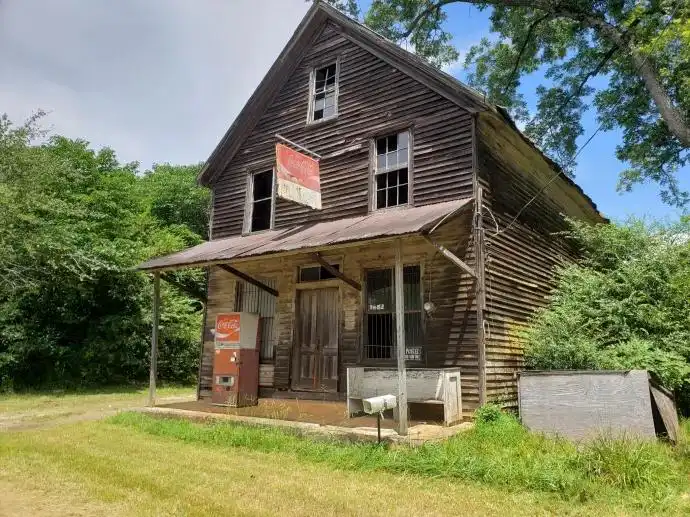
Historic Auraria Woody’s General Store
Tucked away in the hills of Lumpkin County, just a few miles southwest of Dahlonega, lies Auraria, Georgia. Today, a traveler passing through might see little more than a quiet crossroads, historic markers, and a few reminders of another era. Nearly two centuries ago, however, Auraria was a bustling gold-mining settlement filled with prospectors, merchants, lawyers, taverns, and people hoping to make their fortunes.
Auraria's story is closely tied to the Georgia Gold Rush, one of the most important events in the early history of North Georgia.
Gold Is Discovered in North Georgia
The Georgia Gold Rush began in the late 1820s. One of the best-known stories credits Benjamin Parks with discovering gold in 1828 after noticing gold in a rock in the North Georgia mountains. Historians point out that several competing stories exist about who actually made the first discovery. What is certain is that news of gold spread rapidly.
Thousands of prospectors soon poured into the region. By 1830, as many as 10,000 people were searching for gold in Georgia. Much of the gold-bearing territory was still Cherokee land, and the massive influx of miners became known as the Great Intrusion.
This part of the story is important. The gold rush brought wealth and rapid settlement, but it also intensified pressure on the Cherokee people. Their lands were divided and distributed, and the Cherokee were ultimately forced west during the removal that culminated in the Trail of Tears.
The Birth of Auraria
In 1832, a settlement began developing between the Chestatee and Etowah rivers. William Dean reportedly constructed one of the first permanent buildings there in June of that year. The community was initially associated with names such as Nuckollsville before becoming known as Auraria, a name derived from the Latin word aurum, meaning gold.
Auraria grew at an astonishing pace.
Within months, the settlement reportedly contained more than 100 houses, around 20 stores, approximately 15 law offices and several taverns. By 1832, its population had reached about 1,000 people, with thousands more living and mining throughout the surrounding countryside.
Imagine Auraria during those years: wagons traveling muddy roads, miners carrying picks and pans, merchants selling supplies, horses tied outside taverns and newcomers arriving almost daily. Gold transformed a remote mountain settlement into one of Georgia's busiest frontier communities.
Auraria Versus Dahlonega
Auraria's position as the center of the region did not last long.
Lumpkin County was officially created in 1832. A nearby settlement known as Licklog was chosen as the county seat and became Dahlonega in 1833. Businesses, government offices and residents increasingly moved toward the new county seat.
For Auraria, losing the county seat was a major blow.
Dahlonega's importance grew even further when Congress authorized a federal branch mint there in 1835. The Dahlonega Mint began operations in 1838 and eventually produced more than $6 million in gold coins before closing in 1861.
Auraria, meanwhile, gradually lost the prominence it had enjoyed during the first frantic years of the gold rush.
The California Gold Rush Changes Everything
Gold mining did not disappear immediately from Lumpkin County. In fact, substantial quantities of gold continued to be produced. Lumpkin County reports that more than $36 million in gold was produced in the greater county area between 1828 and 1848.
Then came news from California.
The discovery of gold there in 1848 triggered the California Gold Rush of 1849. Thousands of experienced miners headed west, including many who had learned their trade in Georgia.
The migration accelerated Auraria's decline. The businesses, homes and gathering places that once served a booming mining population were no longer needed on the same scale. Over time, buildings disappeared, forests reclaimed cleared land, and the once-busy community became what is now often described as a ghost town.
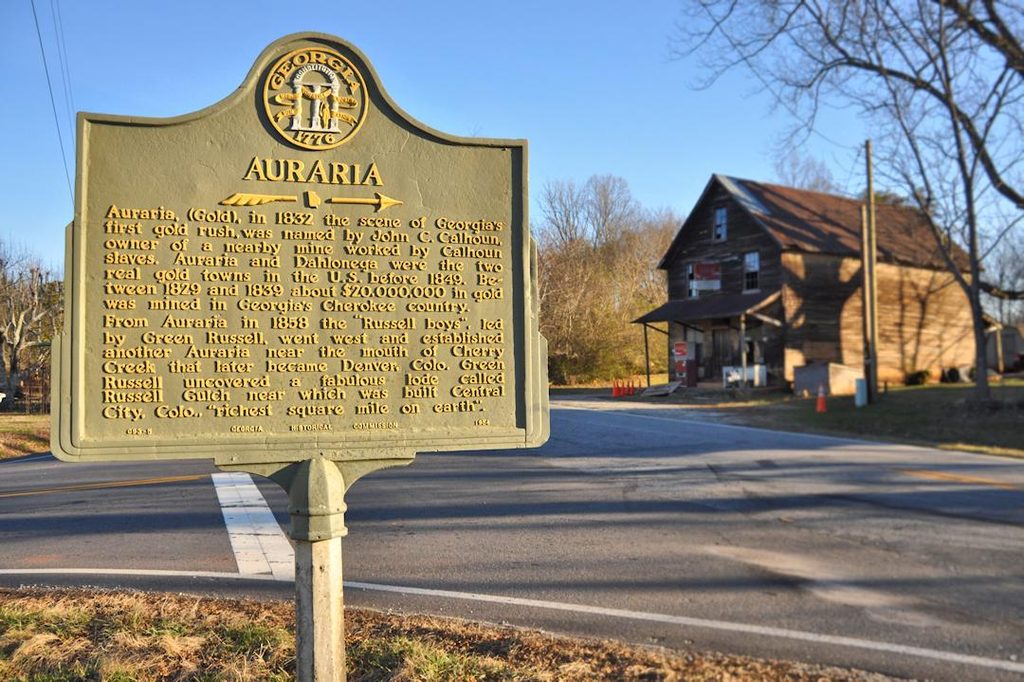
Interestingly, Auraria's name traveled west as well. Georgia miners participated in later western gold rushes, and another Auraria was established near Cherry Creek in what became Denver, Colorado. A Georgia historical marker at Auraria notes the connection between the two communities.
Auraria Today
Modern Auraria is a dramatic contrast to the settlement of the 1830s. There is no crowded commercial district and no army of miners digging along the streams. Instead, the area offers a quiet glimpse into a remarkable chapter of North Georgia history.
For people living in or visiting Dahlonega and Lumpkin County, Auraria serves as a reminder that the region's famous gold story did not begin around Dahlonega's present-day Public Square alone. Auraria was one of the earliest and most important boomtowns created by the rush. Lumpkin County itself describes Auraria as the original center of the gold rush before Dahlonega replaced it.
Its remaining historic landscape also helps visitors imagine just how quickly fortunes could change in a mining community. In only a short period, Auraria went from wilderness to boomtown and then began a decline that eventually left little evidence of its former size.
A Lasting Piece of Georgia History
Auraria may no longer be a thriving town, but its place in Georgia history remains significant.
Its story includes adventure, ambition and the search for wealth, but it also reflects the displacement of the Cherokee people and the enormous social changes brought by the Georgia Gold Rush. The rise of Dahlonega, establishment of the Dahlonega Mint, migration of miners to California and later western gold discoveries can all be connected in some way to the world in which Auraria briefly flourished.
The next time you travel the roads south of Dahlonega, remember that the peaceful countryside around Auraria once echoed with the sounds of picks, shovels, wagons and thousands of people searching for gold.
Auraria's buildings may have largely disappeared, but its story remains an important part of the history of Lumpkin County—and of America's first major gold rush.
Discover the fascinating history of Auraria, Georgia, the once-booming Lumpkin County gold rush town that rose rapidly in the 1830s before being overshadowed by Dahlonega and the great gold rushes of the American West.
*** Don't forget you can always find Creative Printing & Signs on social media as well. Here are our pages: Facebook, Instagram, Pinterest, and LinkedIn. You can also get all our past news by clicking here.
- Business Cards
- Banners
- Yard Signs
- Vehicle Graphics & Wraps
- Window Graphics
- Storefront Lettering
- Posters
- Brochures
- Door Hangers
- Custom Stickers & Labels
- Aluminum & Coroplast Signs
- Promotional Products
- Apparel Printing
- Restaurant Menus
- Coil-Bound Booklets
- And much more